The main challenge is closing the winter electricity gap
Over 75 stakeholders gathered at the national transmission system operator Swissgrid in Aarau for CGES's first Annual Event to address Switzerland's green energy transition. The main challenge is closing the winter electricity gap, especially as nuclear plants phase out. Switzerland still relies on two-thirds fossil fuels and must expand storage capacities and cross-border cooperation. CGES introduced a Power-to-X project tracker and presented an updated of the four CGES catapult projects that are developed as lighthouse projects.
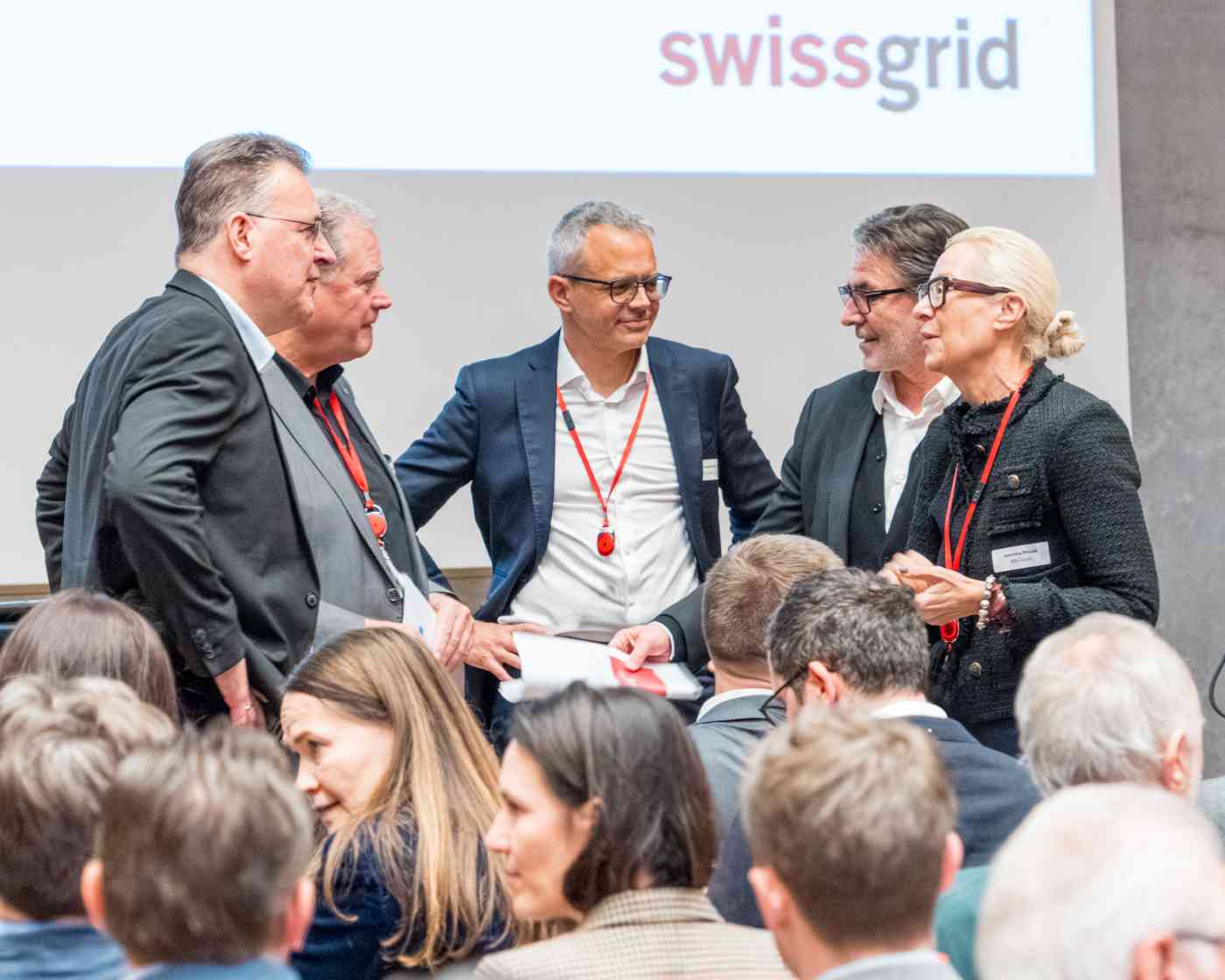
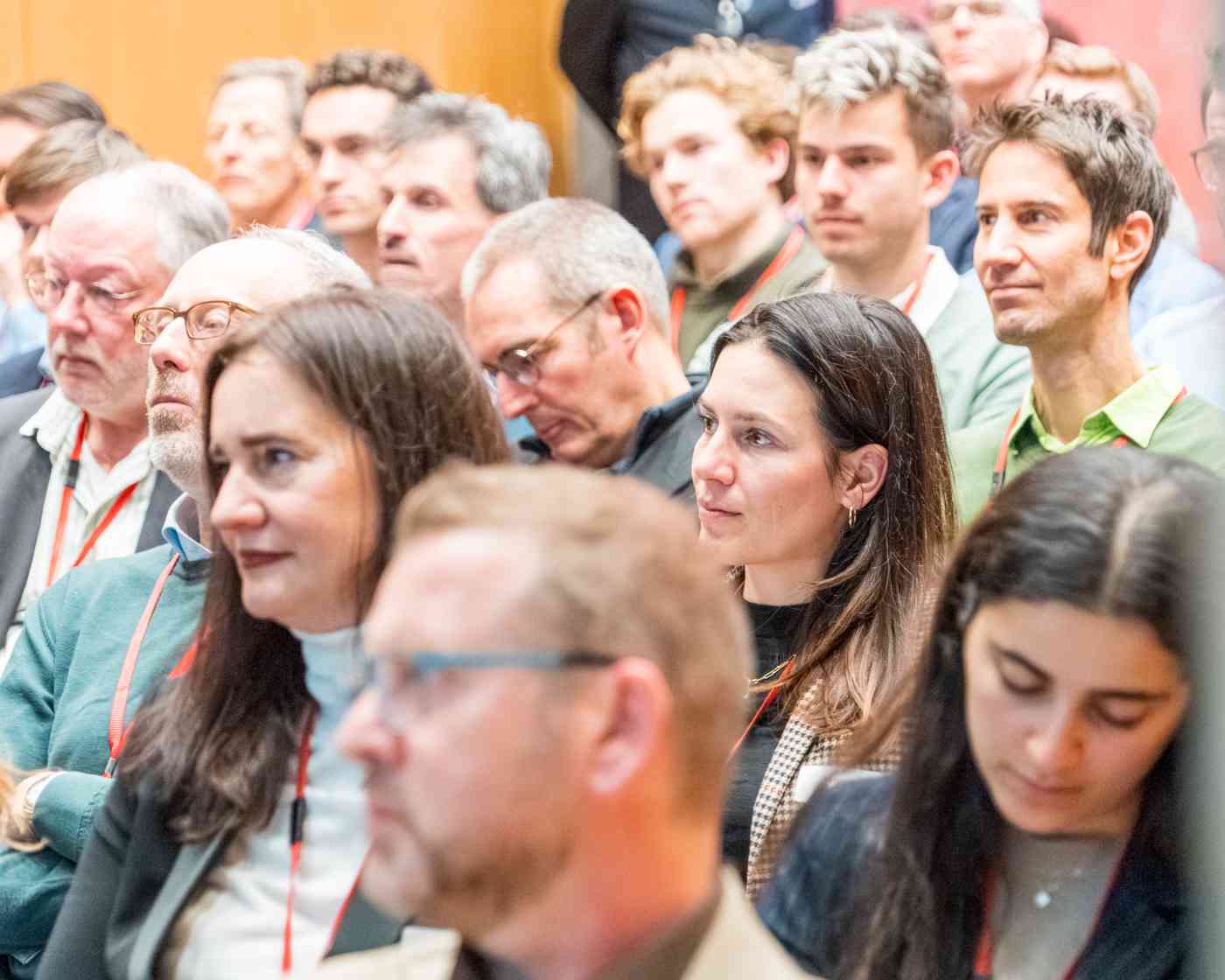
More than 75 participants from the industry, politics and academia came together at the first Annual Event of CGES on 21 November to discuss the transition to green energy in Switzerland. The host Swissgrid provided insight into their responsibilities, their control room and the challenges ahead.
In his welcome address, Joël Mesot, President of ETH and CGES, highlighted three key challenges: first the political headwind for climate goals, secondly managing seasonality, i.e. storing surplus green electricity in winter, and thirdly ensuring security and grid stability.
Significant responsibility to keep the Swiss electricity system stable
“The main job of Swissgrid is to keep the lights on in Switzerland”, said Yves Zumwald, CEO of Swissgrid, in his keynote speech. Rather than operating energy production, Swissgrid builds and maintains the infrastructure including the high-voltage lines. In addition to its infrastructure responsibilities, Swissgrid operates the grid and exchanges electricity with all the European neighbours. Collaboration is key toensuring that electricity continuously flows in Switzerland and throughout Europe.
While more than enough energy is produced during the summer, there is a significant shortfall in the winter, especially at night. This will be even more so an issue in the future without nuclear power plants. Therefore, the big question is, how will we close the winter gap?
Yves Zumwald pointed out three solutions to increase the flexibility of electricity supply in the future: (1) Expanding storage capacities across all levels, (2) securing cross-border electricity market integration and (3) enabling flexible and system-friendly behaviour.
Stability and green energy
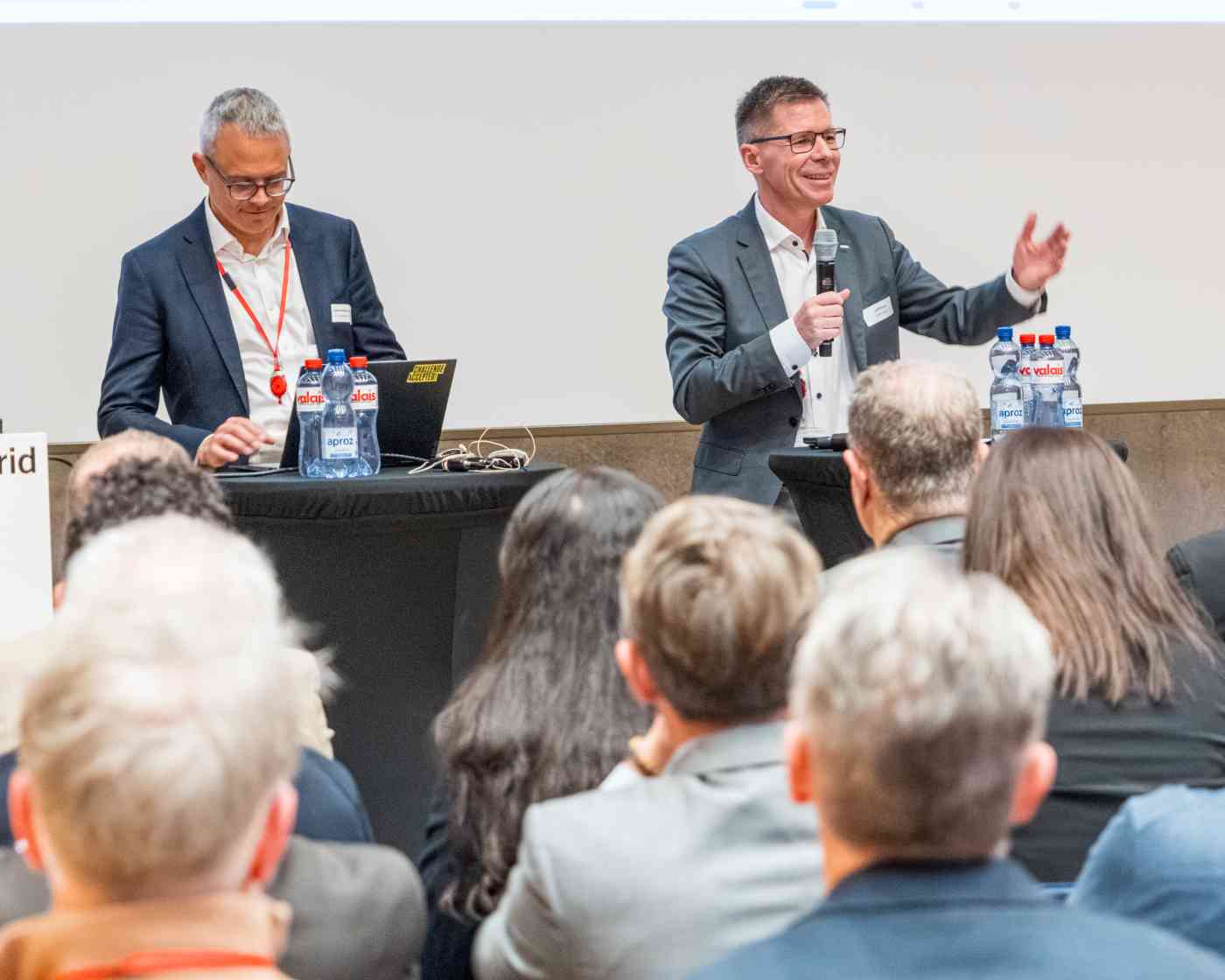
During the panel discussion, led by Jeannine Pilloud, Head Partnerships for Innovation at ETH Zurich, participants agreed that, with two thirds of its energy sources being fossil fuels, Switzerland is late in the transition to green energy. Hans-Kaspar Scherrer, the CEO of Eniwa - a regional energy and infrastructure service company in the canton of Aargau - said that to meet climate and energy goals that Switzerland has set we must increase large storage capacities and consider gas, methanol, and PtX.
“We must achieve stable grids and reduce our footprint” said Till Rümenapp, Head of Corporate Research Switzerland at ABB, while Yves Zumwald emphasized collaboration: “We are not alone. Let’s work with Europe and become more efficient.”
CGES catapult projects are taking shape
The Co-Directors Antonello Nesci and Christoph Sutter introduced the Swiss Power-to-X project tracker which can be found on the CGES website and provides an update on four catapults, focusing on solid waste energy storage and sustainable synthetic fuel accelerators:
- SynErgyX biogas plant for synthetic biomethane in Aarau, eniwa
- Green methanol in Zug (GMZ)
- Green methanol production in Chablais
- Solid waste gasification in Neuchatel
Furthermore, Joël Mesot and Anna Fontcuberta i Morral (President of EPFL and member of the CGES Board) held the first CGES Annual Meeting with representatives of the premium members ABB, BKW and Tech Cluster Zug, as well as the other members. Currently, CGES consist of 16 member organisations. Joël Mesot invited interested organisations to join the association as additional members.
The transition to green energy comes at a cost
In his closing remarks, Joël Mesot emphasized: “We need to make the transition to green energy. The longer we wait, the bigger the issues will become.” He believes that the role of the university is to find solutions to challenges that will emerge in 10 to 15 years’ time, and he urges all parties involved to pursue the different technologies.
While the development and transition to green energy comes at a cost, the industry has noted that many customers are unaware that renewable energy comes at a price which has to be paid.
On the other hand, Joël Mesot noted that several days of blackout could ruin our economy. Green energy storage solutions will play a significant role in securing a stable grid and avoiding power outages.